OLD MENS PROVINCIAL CEMETERY
The Cemetery:
The discovery of gold in this region in 1858 drew thousands of people from across Canada and around the world. Many came seeking opportunity as fur trappers, miners, loggers, ranchers, railway workers, and road and bridge builders. Their labour helped shape the province's early development, but not all found lasting prosperity. As they aged, many settlers found themselves without family, income, or support.
In 1893, the City of Kamloops was incorporated. That same year, the provincial government passed legislation establishing a home for aged and infirm men. Two years later, in September 1895, the Provincial Home for Old Men opened on Columbia Street (current location of Ponderosa Lodge), on land once owned by Government Agent and Constable John Ussher. The new 65-bed building offered medical care, warmth, and meals.
The home welcomed men from diverse backgrounds and countries who came to British Columbia to build new lives. For many, it became their final home. As the population and subsequent number of deaths increased, a dedicated cemetery was officially established in 1922 on four acres of the former Ussher ranch land here, on 6th Avenue, then considered the outskirts of Kamloops.
Before the cemetery opened, 296 residents who died at the Provincial Home for Old Men were buried elsewhere. Information about these individuals can be found on interpretive panels along the south fence.
In the cemetery's northwest corner are 146 graves of people originally interred at the site of the current Presbyterian Church on 6th Avenue that were later reinterred here. Their stories are shared on panels along the north fence.
The last burial in the Provincial Home for Old Men Cemetery took place in 1974, the same year the home closed. More than a century after its establishment, the cemetery serves as the final resting place for men from more than 30 countries who spent their final years at the Provincial Home for Old Men. While most graves remain unmarked, archival records preserve the name and location of each burial. Twenty-two original gravestones remain visible throughout the site, and additional grave markers have been installed for veterans through the efforts of the Last Post Fund.
Although the Provincial Home for Old Men no longer stands, the stories of its residents continue to be honoured throughout this site. Interpretive cairns located along the perimeter trail commemorate the lives and contributions of the settlers, workers, veterans, and immigrants who helped British Columbia develop. Each cairn identifies the individuals interred in the adjacent section, creating a lasting connection between the people remembered and the place where they rest.
This historic cemetery now stands as a lasting tribute to those whose lives and contributions helped shape both British Columbia and the Kamloops community we know today.
The Arboretum:
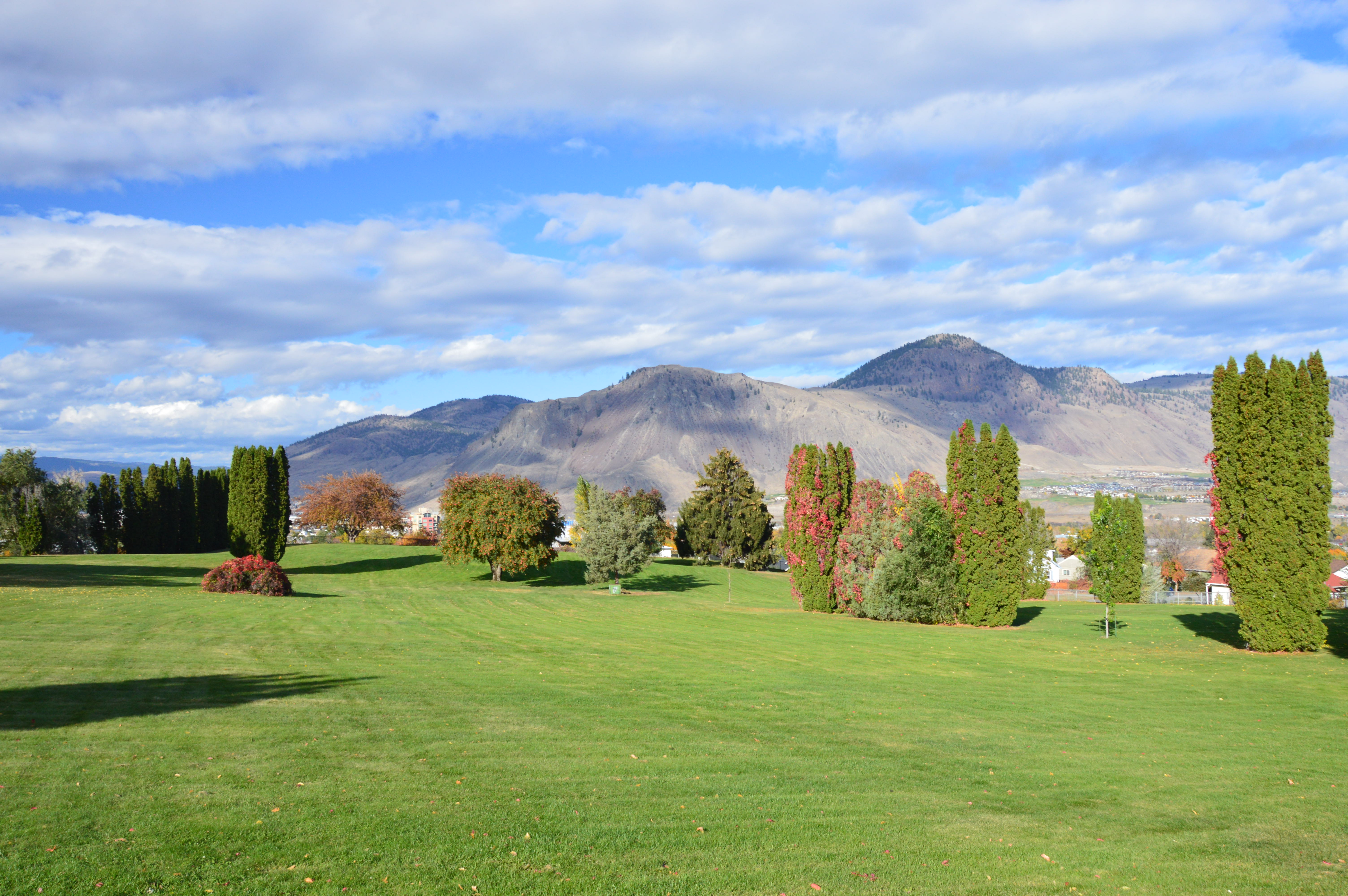
Development of an arboretum within the cemetery site began in 2021, featuring a collection of tree species carefully selected to reflect the diverse origins of the men buried here.
Representing countries from around the world, these trees serve as living symbols of the many journeys that brought people to British Columbia. Additional species were chosen for their uniqueness and their contribution to the site's natural beauty and biodiversity.
The maple-lined central pathway guides visitors through the grounds toward a labyrinth, offering a quiet space for contemplation and peaceful meditation.
Community support has played an important role in preserving and enhancing this historic place. The Sagebrush Neighbourhood Association funded decorative entrance gates to commemorate the cemetery's 100th anniversary, helping ensure the stories and legacy of those laid to rest here are remembered for generations to come.
Today, the cemetery and arboretum represent a living memorial, honouring the past while providing a tranquil green space for learning, remembrance, and reflection.
Source: City of Kamloops